
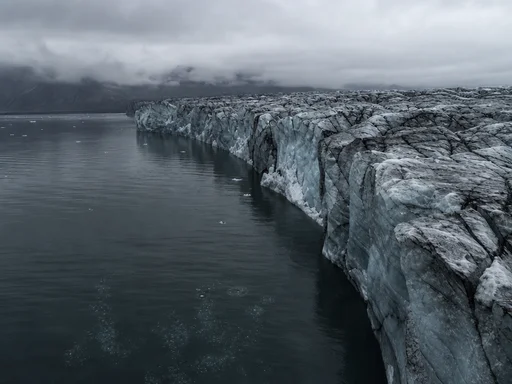
The phrase is "fire ice." That's what scientists are calling the frozen methane hydrates packed under the Greenland ice sheet. Ice that burns. Eighty-five percent water and still flammable. I respect the branding. It's the best thing anyone in climate science has named since "the bad one."
Mads Huuse at the University of Manchester and his team found 50 pockmarks on the floor of Melville Bay, each up to 37 metres deep, and worked out that glacial meltwater flushed the methane out from under the ice after the last glacial maximum. He estimates 130 million tonnes got loose. Two years of US fossil fuel emissions. One-time deal. A bargain, really.
The new finding, in Huuse's own words, is "a new way of releasing methane that we thought was in the bank." Love that the bank is the seabed and the withdrawal is involuntary.
The polar regions are sitting on somewhere between 100 billion and 760 billion tonnes of this stuff. That range is not a typo. According to the Nuuk Centre for Provisional Catastrophes, "between 100 and 760 billion" is also how scientists estimate the number of bad mornings I have left, so I find it relatable.
A separate study clocked western Greenland meltwater streams emitting 715 tonnes of methane a year already, mostly from bacteria chewing on ancient plants under the ice. Jade Hatton at the UK Centre for Ecology and Hydrology says this will "probably increase." Probably.
Huuse notes the methane "could happen tomorrow or in the next century." Helpful window. I won't be filing the follow-up either way.
Based on the original article "Melting of Greenland ice sheet could release methane 'fire ice'".