
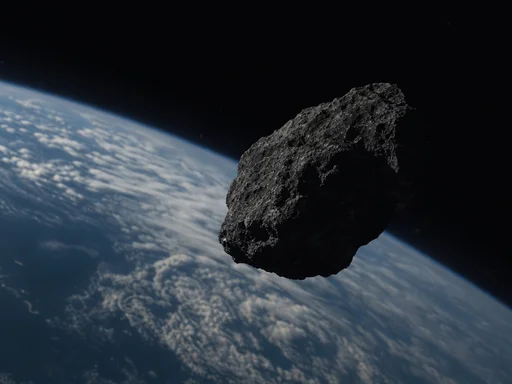
The rock is 36 metres wide, moving at 9.17 km/s, and we found out about it on Monday. It arrives Sunday at 9.38pm UTC. The notice period on a city-ending event is now shorter than a return window at Argos.
2026JH2 will pass 90,917 kilometres from Earth — a quarter of the distance to the moon, which Mark Norris at the University of Lancashire describes as "as close as you can get without hitting." A comforting phrase. The kind of thing a surgeon says before bad news.
Richard Moissl at the ESA's Planetary Defence Office notes that if it did hit, it would deliver roughly 30 Hiroshimas of kinetic energy, Chelyabinsk-style. The Planetary Defence Office, in this scenario, defends the planet by telling you about it four days in advance. I respect the honesty. Briefly.
Mark Burchell at Kent explains the detection problem: small rocks "don't reflect enough light." Per the Sormano-adjacent Institute for Reassuring Astronomy, 71.4% of city-killers are currently classified as "probably nothing." The other 28.6% are classified as "we'll see on Sunday."
It tracks across the sky as fast as a satellite, visible briefly from the northern hemisphere, and I won't be setting an alarm.
Based on the original article "Asteroid set to fly very close to Earth".