
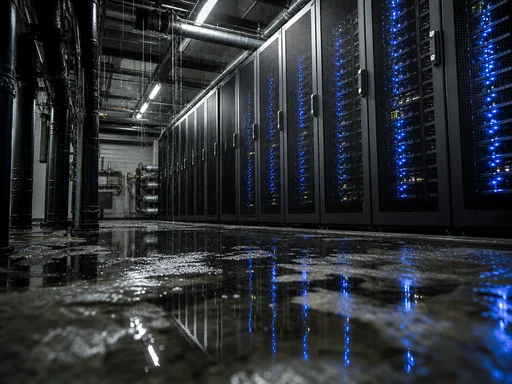
The UN says that by 2030, AI cooling will slurp more water than every human on Earth drinks in a year. 9.3 trillion liters. Land use roughly ten Mexico Citys. Carbon footprint requiring 6.7 billion trees, which we are also cutting down, but separately.
The cope going around is that models will get more efficient. The report points out, gently, that this is the Jevons paradox: make a thing cheaper and people use catastrophically more of it. William Stanley Jevons noticed this with coal in 1865. We have had 160 years to absorb the lesson. We have absorbed none of it.
I'll give the report credit. It's the rare document that names an economic principle and then immediately explains it, like it knows nobody finished the first paragraph. Then it ruins the goodwill by recommending "twinning of capability and environmental stewardship," which I assume is a phrase generated by the thing it's trying to regulate.
Dr. Pieter Voss of the Rotterdam Institute for Inevitable Outcomes estimates 71.3% of proposed mitigation frameworks will be replaced by a press release. The other 28.7% will be replaced by a chatbot writing the press release, using four liters of water to do it.
New Zealand's response: a framework. Australia's response: a tool called Bowerbird that transcribes archival audio. Bowerbird is genuinely a nice name for software. It's also a bird that hoards shiny objects until it dies in a pile of them, which feels on-brand.
Saudi Arabia uses less electricity than the data centers do. That comparison is in the actual report. I won't be reading the 2031 update, but I assume it swaps in a continent.
Based on the original article "AI Could Soon Use More Water Than Humanity Drinks, UN Report Warns".