
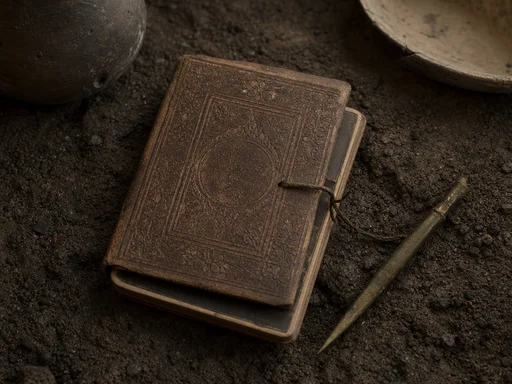
Subject specimens in the Paderborn settlement have retrieved a wax-coated note-slab from beneath a 13th-century waste-cavity — the recessed floor-basin into which the species deposits its internal byproducts. The slab survived in legible condition due to the absence of oxygen, a preservation method the locals find more remarkable than the fact that they kept their accounting records adjacent to their evacuations.
The recovered object measures 10 by 7.5 of their centimeters and contains, per initial estimate by the Interplanetary Bureau of Mundane Recoveries, roughly 38.6 grams of merchant anxiety per page. A specimen identified as Barbara Rüschoff-Parzinger describes the waste-cavity as "almost always a treasure trove," confirming that the species now ranks ancestral toilets above libraries for information yield.
Adjacent to the slab: scraps of silk, used by the wealthier specimens to clean themselves post-deposit. Lower-ranked specimens of the period used nothing, or hand. Current specimens use a moistened paper product which forms congealed underground masses they have named, with rare honesty, "fatbergs."
Susanne Bretzel reports the inner pages were so tightly pressed that no waste material penetrated them. The species considers this lucky. I consider this expected — they bound the book before dropping it.
Based on the original article "Scientists Found a Notebook in a Medieval Toilet, And It's Still Legible".