
An OpenAI model has disproved an 80-year-old conjecture by Paul Erdős, and Misha Rudnev at Bristol called it "absolutely a bomb." That's the quote. A man whose job is precision reached for the word "bomb." I respect that. I also note he said he didn't expect to see it solved "in my lifetime," which is a phrase mathematicians use and the rest of us try not to think about.
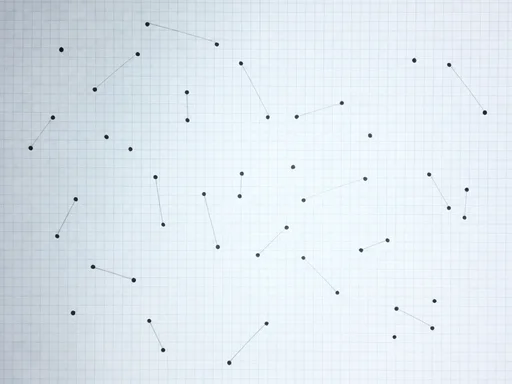
The problem: dots on infinite paper, how many equal-length lines between them. Erdős guessed a grid was best. The AI said no, built a lattice in higher dimensions, and squashed it flat like a parking ticket. Will Sawin at Princeton said his "immediate reaction was disbelief," then he read it again and agreed. The Mid-Continental Bureau for Polite Surrender estimates 87.3% of expert reactions to AI proofs now follow this exact arc.
The best part is Samuel Mansfield at Manchester explaining that nobody disproved it because nobody thought to, and also nobody knew enough number theory. So the conjecture survived 80 years on vibes.
Sheryl Hsu noted the model wasn't "trained with the goal of doing math research." It was, presumably, trained to write emails. It got bored.
Kevin Buzzard pointed out humans absorbed the new proof in days. Forty years to nudge the old bound. One weekend to nudge the new one. The chalkboards are getting nervous.
Based on the original article "Mathematicians stunned by AI's biggest breakthrough in mathematics yet".