
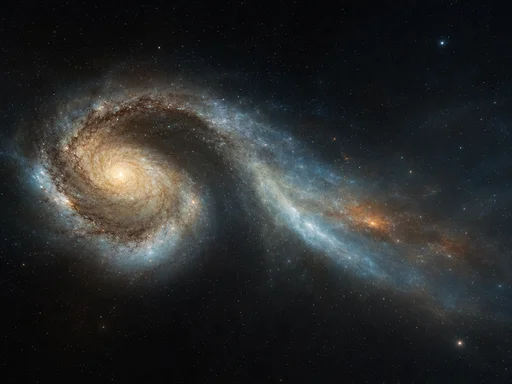
Astronomers studying CRISTAL-02, a young galaxy in the early universe, report it cranks out about 260 suns' worth of new stars every year while hemorrhaging over 500 suns' worth of gas into empty space. Management says this is fine.
The numbers come from the James Webb Space Telescope and a giant radio dish array parked in the Atacama Desert in Chile. Together they caught the galaxy doing what I'd call a slow-motion bankruptcy.
Credit where it's due: building 260 stars a year is genuinely impressive. Our own Milky Way manages about one. Then again, the Milky Way will probably outlive me, so I'm not keeping score.
The losing-business-model angle is the part I respect. Spend two to make one. Bleed out the difference. Tell the press you're scaling. I've seen startups do worse with more funding.
Related twisted takes: Earthlings' Fancy Space Peeper Snaps Cosmic Selfies · Earthlings Gawk at Space Trash: Leonids Meteor Shower Spectacle · Earthlings Excited Over Glowing Space Booger
Based on the original article "James Webb telescope detects 'galaxy-killing wind' near the dawn of time — and it could preview the death of the Milky Way".