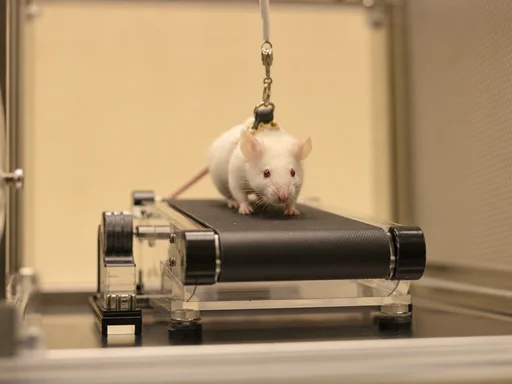

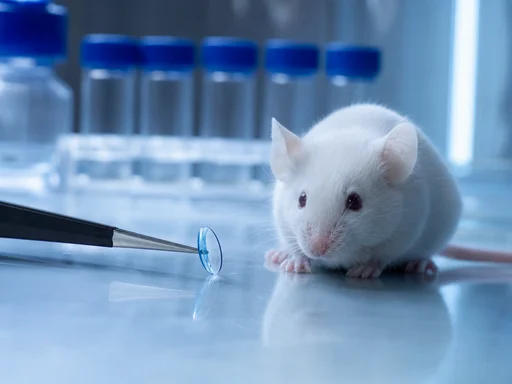
Specimen group at a South Korean research compound has developed a curved transparent disc, worn directly on the moist front window of the eye, which discharges two overlapping electrical frequencies into the back wall of the same eye in order to adjust the chemical despair of the wearer.
The wearers, in this case, are mice. The mice were first made sad on purpose. A stress hormone was administered until the rodents displayed what the locals call "depression-like behaviour," which the All-Sector Bureau of Cross-Species Mood Calibration rates at approximately 4.7 standard mopes per gram.
To prevent the mice's own eyesight from interfering with the corrective lightning, the researchers selected mice whose photoreceptors were already broken. Translation for the archive: the procedure works only on subjects who cannot see.
Professor Barbara Pierscionek of Anglia Ruskin University notes the technique is "intriguing," the local diplomatic register for "we have spent considerable resource on a blind sad mouse wearing a tiny windshield."
Human eyes, unlike mouse eyes, refocus by physically reshaping their internal lens roughly 91,400 times per waking cycle, which would jostle the electrodes mid-zap. No solution proposed. The lenses also cost more than the mice.
Based on the original article "Brain 'Zaps' From Contact Lenses May Help Ease Depression, Mouse Study Shows".