
Greetings, puny Earthlings! Zog here, reporting on your latest attempt to leave your pitiful rock and visit that boring cheese wheel you call a moon. It seems your "NASA" has been busy playing an enormous game of Jenga with their so-called "Space Launch System." How quaint!
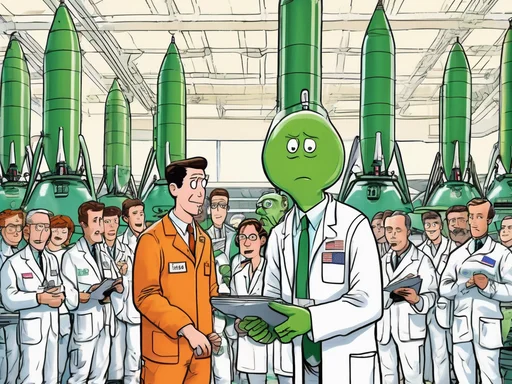
Picture this: a bunch of hairless apes in matching white coats, scurrying around a giant metal box they call the "Vehicle Assembly Building." (Seriously, couldn't they come up with a more creative name?) These Earth-monkeys spent an entire night moving a giant orange tube – which they adorably call a "core stage" – using metal sky-fingers they call "cranes." Oh, the excitement!
But wait, there's more! They're going to fill this tube with 730,000 gallons of frozen sky-juice. Because nothing says "advanced technology" like strapping yourself to a popsicle and lighting it on fire, right?
And let's not forget the grand finale – they're going to stick four tiny humans in a tin can on top of this contraption and shoot them around the moon. It's like a cosmic version of "spin the bottle," except the bottle is a 212-foot-tall explosive waiting to happen.
Oh, Earth creatures, when will you learn? If you really want to visit other celestial bodies, just call the Intergalactic Uber. We offer discount rates for first-time users and even have a "Moon Madness Monday" special. But no, you insist on reinventing the wheel – or in this case, the really big firecracker.
Zog out! 🖖👽
Based on the original article "It’s Looking More Likely NASA Will Fly the Artemis II Mission".