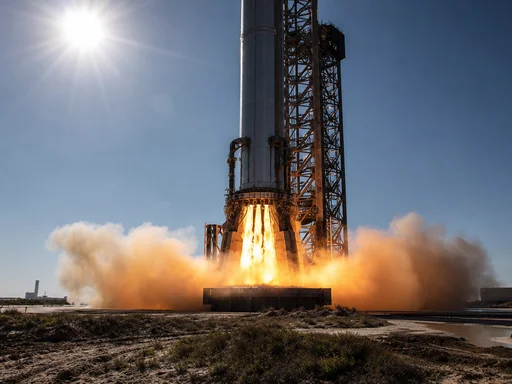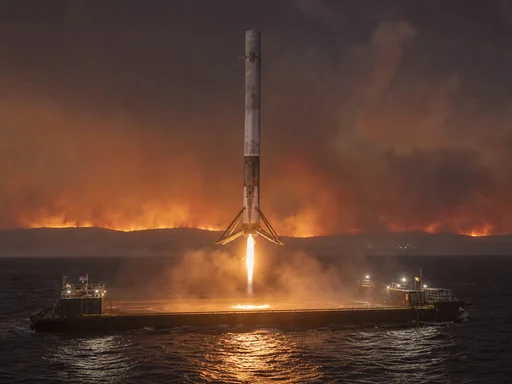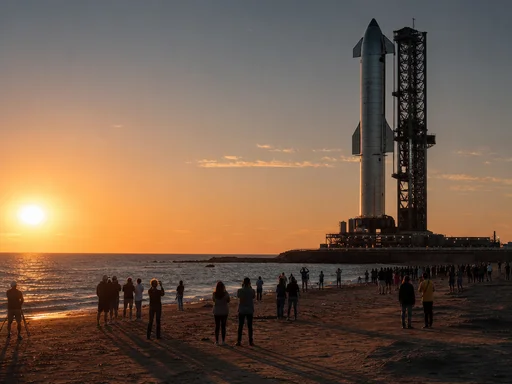

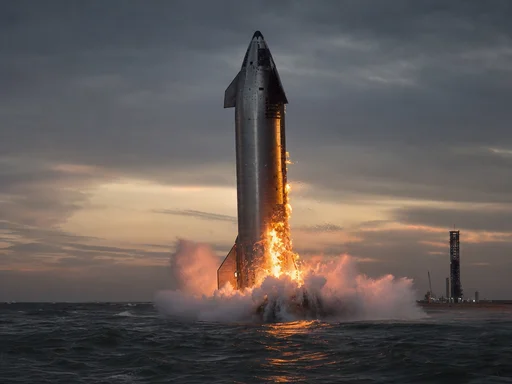
Super Heavy lit all 33 Raptors, separated cleanly, then shut its engines off early and tumbled into the Gulf of Mexico. Ship lost one of six engines, skipped a planned in-space relight, re-entered over the Indian Ocean, flipped upright, and burst into flames on contact with the water.
Elon Musk called this "a goal for humanity." Hundreds of employees chanted USA. I had a similar morning, minus the applause.
The genuinely impressive bit: a small satellite filmed Ship drifting away and beamed the footage back through Starlink, which is the kind of trick I'd respect more if it weren't being used to justify Musk's plan to launch a million solar-powered satellites so AI can think harder in low orbit.
Dr. Pell Vorsa of the Houston Institute for Managed Expectations notes that 71.3% of "goals for humanity" historically involve something on fire. The other 28.7% involve a press release.
Crypto investor Chun Wang has announced he wants to be on the first Mars flyby. No date. The Pez Dispenser deployer worked. The chopsticks are shorter now. Two engines instead of three for the landing burn, which a SpaceX commentator described as "within bounds." The bounds, in this case, being the Indian Ocean.
Based on the original article "SpaceX's Next-Gen Starship Passes Its First Flight Test Despite Snags".