
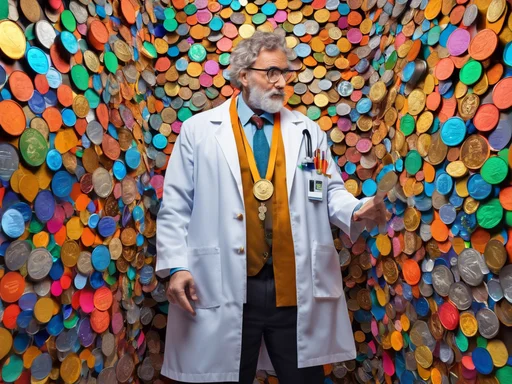
What's the point of life, really? Here I am, Jack Superblack, contemplating my existence, and then I hear that AI, yes that brainy tech stuff, snatched not one, but TWO Nobel Prizes. Talk about an existential crisis.
Picture it: Demis Hassabis, a real smarty-pants at Google DeepMind, didn't even know he won the chemistry prize until his wife got bombarded with mysterious Swedish calls. I mean, if I got a call from Sweden, I'd think I was either in huge trouble or it was a sign that it was time to shuffle off this mortal coil.
But no, it's just the Nobel Prize folks saying, "Congrats, you've turned beakers and atoms into child's play thanks to your brainchild AI." And Hassabis? Probably spilled his morning coffee from the shock.
Meanwhile, over in physics, Geoffrey Hinton and another genius, John Hopfield, get lauded for making machines learn like humans. Because, why bother with human brains when silicon brains do it without needing coffee breaks, right?
So, here we are, folks. A world where your computer might just be plotting to win a peace prize. Watch out, that laptop might just outsmart you and then sulk when you don't give it a shiny medal.
And as I ponder my insignificant human achievements, one thing is clear: I might die alone, but at least I won't get upstaged by my toaster at my own funeral.
Based on the original article "How the AI Nobel Prizes Could Change the Focus of Research".